
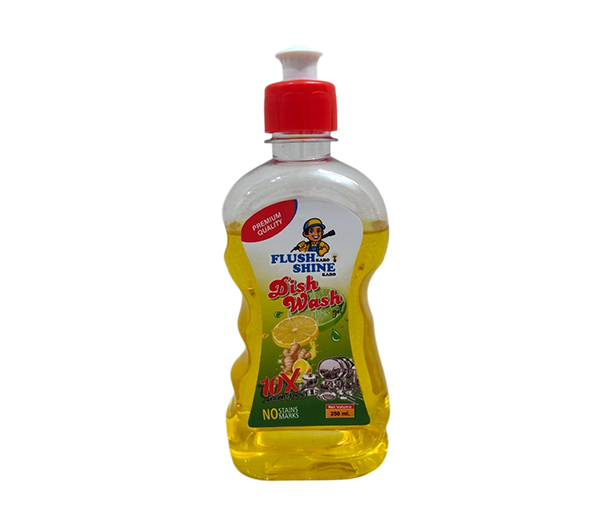
Description
Twenty years of watching kitchen cleaning habits teaches you one thing: most people don’t actually have a “dish soap doesn’t work” problem — they have a “used three drops when the grease needed ten” problem. FlushShine Dish Wash Gel 250ml is built to close that gap. It’s a thick, grease-cutting gel that lathers fast even in a small amount, so a bottle this size still stretches across weeks of daily washing rather than running dry in ten days.
Here’s everything worth knowing before you buy it — what’s actually in the pack, where it earns its keep, how to get the most out of a single squeeze, and the questions people ask before checkout.
What Is FlushShine Dish Wash Gel 250ml?
It’s a concentrated liquid gel dish wash packed in a 250ml bottle, built to cut through oil, grease, and baked-on food residue on everyday utensils, cookware, and glassware. The gel consistency matters more than people assume — a thinner, watery dish soap spreads too fast on a wet sponge and gets rinsed off before it’s done any real work. A gel holds its place on the sponge, builds lather on contact with grease, and keeps working through the full wash instead of disappearing after the first rinse.
It’s formulated to be gentle enough for repeated daily hand contact, which matters more here than almost any other cleaning product in the house — dish wash is the one bottle that touches bare hands multiple times a day, every single day.
Product Details & Specifications
| Attribute | Detail |
|---|---|
| Product Name | FlushShine Dish Wash Gel |
| Pack Size | 250ml (bottle) |
| Product Type | Concentrated liquid gel dish wash |
| Format | Thick gel — pour or squeeze onto sponge |
| Primary Use | Grease removal from utensils, cookware & glassware |
| Recommended For | Home kitchens, small households, hostels, tiffin services |
| Application Method | Apply a small amount to a wet sponge or directly onto dishes, scrub, rinse |
| Brand | FlushShine — Haritus Pharmaceuticals OPC Pvt. Ltd. |
| Price | ₹60 (MRP ₹68) |
| Availability | In stock, Cash on Delivery available |
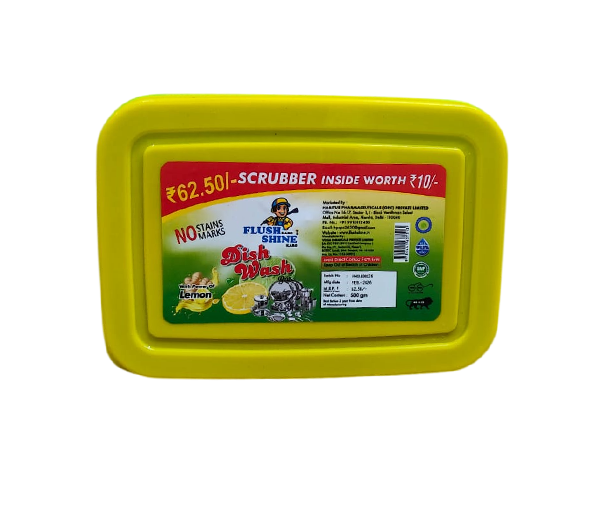
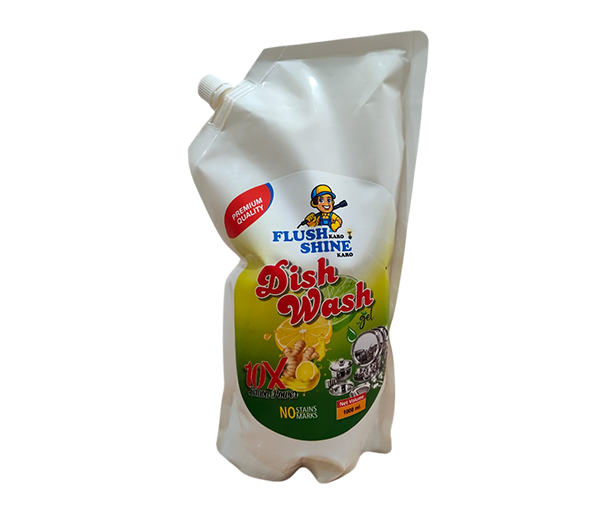
| Related Sizes | Also available in 1000ml gel and 500gm bar formats |
The 250ml size is the right call for a single-person or small household kitchen, or as a backup bottle kept at a second sink — if your kitchen goes through more than one load of dishes a day, the 1000ml bottle works out cheaper per wash.
Where and How This Product Gets Used
| Location / Use Case | Why It Fits |
|---|---|
| Everyday kitchen sink | Daily washing of plates, cups, cutlery and cooking vessels |
| Greasy cookware | Cuts through oil residue on pans, kadhais, and tawas without needing a second wash |
| Glassware & crockery | Gentle enough to leave glasses and ceramic plates streak-free |
| Small households & PGs | 250ml size fits a one- or two-person kitchen’s actual usage pace |
| Tiffin & lunchbox cleaning | Cuts oil residue from steel tiffins and containers without leaving a soapy smell behind |
| Hostel & shared kitchens | Quick-rinse formula that doesn’t need excessive water to clear residue |
Grease behaves differently depending on how fresh it is. Oil that’s still warm or recently cooked wipes away with far less effort than oil that’s cooled and hardened onto a pan overnight. If a pan sits unwashed till morning, a quick soak in warm water for a few minutes before scrubbing cuts the actual cleaning time in half — the gel does the chemical work, but warm water does the physical loosening.
How to Use FlushShine Dish Wash Gel — Step by Step
Most of the “this dish soap isn’t strong enough” complaints actually trace back to technique — either too little product for the grease level, or rinsing before the gel’s had a chance to break the oil down. Here’s the sequence that gets the most out of every squeeze:
| Step | Instruction |
|---|---|
| 1. Wet | Wet the sponge or scrubber under running water before applying the gel. |
| 2. Apply | Dispense a small amount of FlushShine Dish Wash Gel onto the sponge — more for heavily greased pans, less for everyday plates. |
| 3. Work it in | Rub the sponge to build a lather, then scrub dishes in circular motions, paying extra attention to greasy spots and edges. |
| 4. Let tough grease sit | For baked-on residue, apply the gel directly to the pan and let it sit for 2–3 minutes before scrubbing. |
| 5. Rinse | Rinse thoroughly under running water until no soapy residue or slip remains on the surface. |
Why Grease-Cutting Technique Actually Matters
Oil and water don’t naturally mix, which is the entire reason dish soap exists in the first place — it’s built with molecules that grab onto grease on one end and bond with water on the other, lifting oil off a surface and letting it rinse away instead of just smearing it around. A thin, watery soap has fewer of those active molecules per drop reaching the grease before the wash water dilutes it. A gel holds concentration longer on contact, which is why a smaller amount of gel often outperforms a larger pour of thin liquid soap.
This is also why cold water alone struggles with set, hardened grease — fat doesn’t break down or loosen well in cold water the way it does with a bit of warmth. Pairing the gel with lukewarm water, especially on pans with cooked-on oil, meaningfully cuts scrubbing effort.
Where People Get It Wrong
Two habits waste more product than anything else. First, applying soap directly to a dry sponge — it spreads unevenly and doesn’t lather properly until water’s added anyway, so you end up using more to compensate. Second, stacking dirty dishes and washing the greasiest pan last “to save it for the end” — by then it’s cooled, hardened, and takes three times the scrubbing it would have taken fresh.
Dish Wash Gel vs. Dish Wash Bar vs. Powder
| Factor | Gel | Bar | Powder |
|---|---|---|---|
| Grease-cutting speed | Fast — concentrated lather on contact | Slower — needs more rubbing to build lather | Moderate — abrasive but less grease-specific |
| Hand feel with daily use | Generally gentler, rinses clean | Can dry hands with heavy daily rubbing | Can feel harsh on skin over time |
| Best for | Everyday greasy cookware and utensils | Quick single-dish clean-ups, no measuring needed | Scouring stuck-on burnt residue |
| Control over quantity used | High — pour exactly what’s needed | Low — rubbing time, not amount, controls usage | Moderate — sprinkle-based, easy to overuse |
A practical kitchen setup often keeps two of these on hand — a gel for daily washing and a bar or scouring powder tucked away specifically for the occasional burnt-pan emergency.
Storage Tips
- Keep the bottle upright near the sink, cap closed between uses, to stop the nozzle from clogging or drying out.
- Avoid storing it in direct sunlight on a windowsill — heat can thin the gel’s consistency over time.
- If refilling a pump dispenser, give the reservoir an occasional rinse rather than topping old residue with fresh gel.
- Keep out of reach of young children, as with any concentrated cleaning liquid.
Who Should Keep This Bottle in Their Kitchen
Small households and single-person kitchens that don’t want a bulky bottle taking up sink space, anyone who’s tired of dish soap that needs three pumps just to cut through a single greasy pan, and households that pack daily tiffins and want a quick-rinse formula that doesn’t leave a soapy aftertaste on steel containers. If your current bottle is thin, watery, and gone within two weeks, the gel format is the straightforward upgrade.
Frequently Asked Questions
What is FlushShine Dish Wash Gel 250ml used for?
It’s designed to cut through oil, grease, and food residue on everyday utensils, cookware, and glassware during regular kitchen washing.
How much should I use per wash?
A pea-to-coin sized amount on a wet sponge is enough for two to three regular plates and a cup — the gel is concentrated, so a little goes further than a thinner liquid soap.
Is it gentle on hands with daily use?
Yes, it’s formulated for repeated daily hand contact, since dish washing is one of the most frequent hand-contact tasks in any kitchen.
Does it work on baked-on or burnt residue?
For heavily baked-on grease, apply the gel directly to the pan and let it sit 2–3 minutes before scrubbing — this loosens residue that a quick scrub alone won’t fully shift.
Can I use it in cold water?
Yes, though lukewarm water noticeably speeds up grease removal on pans with cooked-on or hardened oil, since fat loosens more easily with a little warmth.
Is gel better than dish wash bar or powder?
For everyday greasy cookware, gel generally cuts through faster with less scrubbing. Bars suit quick single-dish clean-ups, and powder works well for scouring stuck-on burnt residue — many kitchens keep more than one format for different jobs.
Will it leave a smell on steel tiffins or containers?
No — it’s designed to rinse clean without leaving a lingering soapy smell, which matters for lunchboxes and tiffins carried the same day.
How long does a 250ml bottle typically last?
For a single-person or small household kitchen washing daily, a 250ml bottle generally lasts a few weeks of regular use before needing a refill.
Is it safe for glassware and ceramic dishes?
Yes, it’s formulated to clean glassware and crockery without leaving streaks or residue behind.
How should I store the bottle?
Keep it upright near the sink with the cap closed between uses, away from direct sunlight, which can thin the gel’s consistency over time.
Does FlushShine offer a larger size?
Yes, this dish wash gel is also available in a 1000ml bottle, and a 500gm dish wash bar for a different format of everyday use.
Is Cash on Delivery available for this product?
Yes, COD is available on FlushShine Dish Wash Gel 250ml, along with standard dispatch within 24 hours of ordering.
The Short Version
FlushShine Dish Wash Gel 250ml is a concentrated, grease-cutting formula built for kitchens that don’t want to pump out half the bottle just to clean one greasy pan. Use it right — a small amount, proper lather, lukewarm water on tough grease — and this one bottle outlasts most thin liquid soaps by weeks.
Reviews
There are no reviews yet.